


What to Know Before Starting a Concrete Home Project in Late Summer in Bells, TX
Late summer can be a great time to tackle a concrete project at your home—whether you are planning a new driveway, patio, sidewalk, shop slab, foundation addition, or decorative concrete upgrade. But here in Bells, TX, August weather brings its own set of challenges. Between intense sun, high temperatures, dry stretches, sudden thunderstorms, and heavy clay soils, concrete work needs to be planned and poured the right way.
At D and R Concrete Construction LLC, we know that a successful concrete project starts long before the truck arrives. As a local concrete contractor serving Bells and the surrounding North Texas area, we understand how our climate, soil, and seasonal conditions affect concrete performance. If you are thinking about starting a home concrete project in late summer, here is what you should know before you begin.
Key Takeaways:
- August heat matters: Concrete can set faster in late-summer temperatures, so timing, water control, and finishing technique are critical.
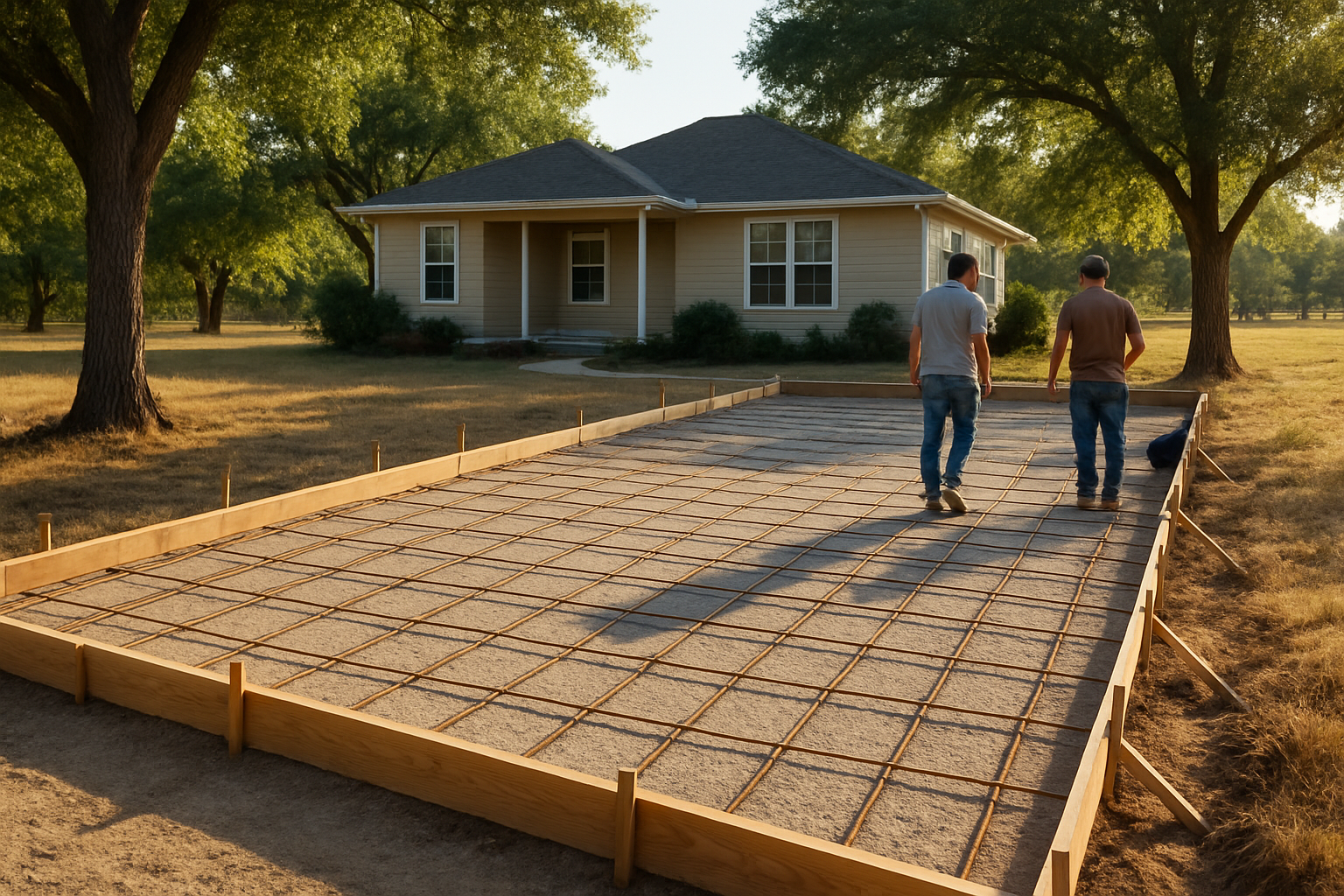
- Site preparation is everything: Proper grading, compaction, drainage, and reinforcement help prevent cracking and settling.
- Plan around weather: In Bells, TX, hot dry days can quickly turn into stormy afternoons, so scheduling and protection are important.
- Hire a local concrete team: D and R Concrete Construction LLC understands North Texas soil, weather, and residential concrete needs.
Why Late Summer Concrete Projects Need Extra Planning
August in Bells, TX is typically hot, sunny, and dry, but that does not mean every day is predictable. Temperatures can climb well into the 90s or higher, and concrete exposed to direct sun can lose moisture too quickly. When concrete dries too fast, it can become more vulnerable to surface cracking, weak finishing, dusting, and long-term durability problems.
Concrete does not simply “dry.” It cures through a chemical process called hydration. That process requires the right balance of moisture, temperature, and time. In late summer, the goal is to keep concrete from setting too quickly on the surface while the rest of the slab is still developing strength.
That is why experienced crews pay close attention to:
- The time of day the concrete is poured
- Air temperature and surface temperature
- Wind speed, humidity, and sun exposure
- Mix design and slump control
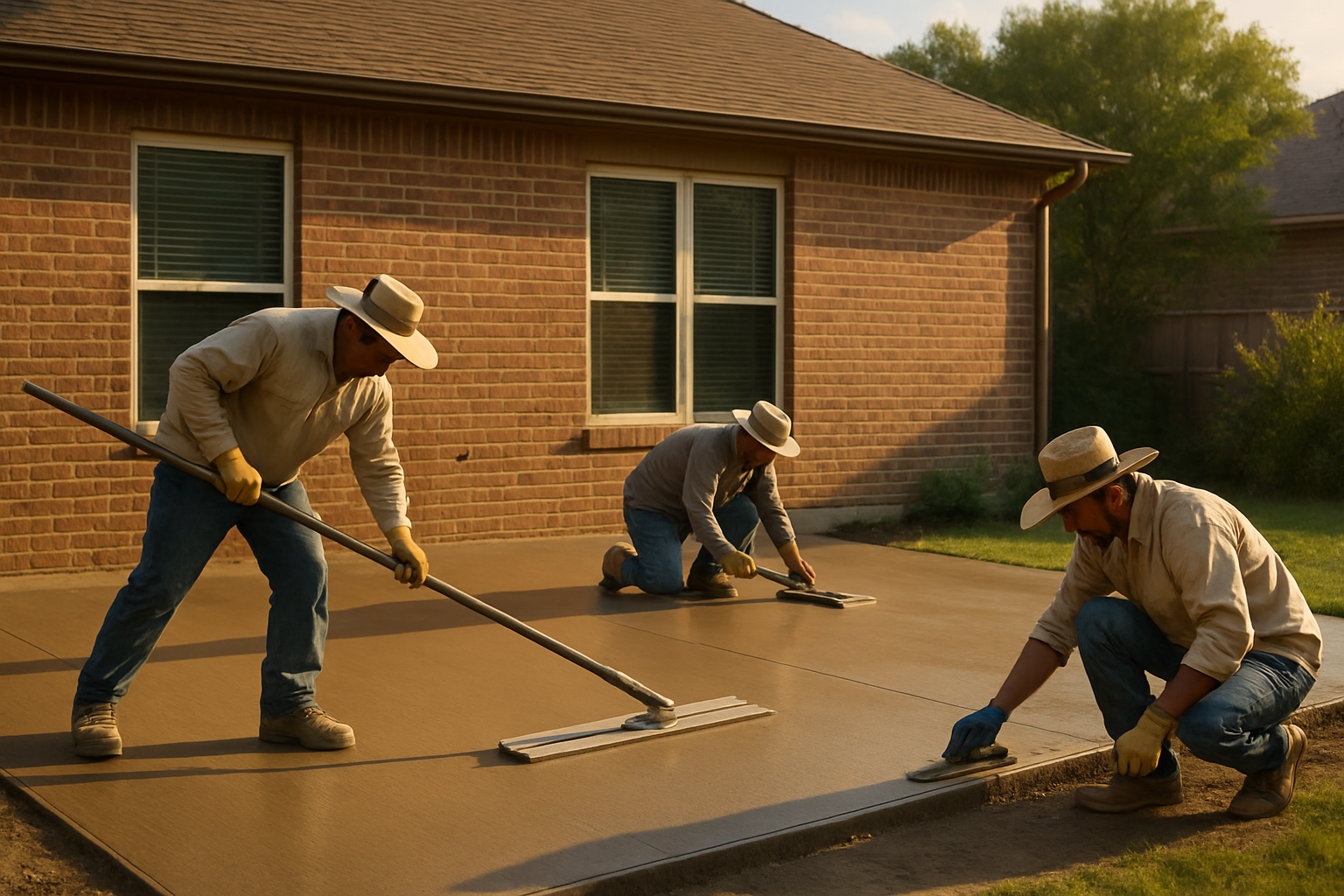
- Finishing timing and curing method
For many residential jobs, early morning pours are often the best option in August. Starting early helps crews place and finish concrete before the hottest part of the day. It also reduces the risk of rapid surface drying caused by afternoon heat and wind.
Start with the Right Site Preparation
One of the biggest mistakes homeowners can make is focusing only on how the finished concrete will look. Appearance matters, of course, but what is underneath the slab is just as important—sometimes more important.
In our part of North Texas, soils can expand and contract with moisture changes. After dry summer weather, the ground can become hard and cracked. Then, when heavy rain comes through, that same soil can shift. If a slab is placed on poorly prepared ground, movement underneath can lead to cracking, uneven sections, drainage problems, and costly repairs.
Before starting a concrete project, homeowners should consider:
- Grading: Water should move away from the home, garage, shop, or outdoor living space.
- Compaction: A stable base helps support the slab and reduces settling.
- Drainage: Low spots should be addressed before concrete is poured.
- Reinforcement: Rebar or wire mesh may be needed depending on the project type.
- Expansion and control joints: Proper joint placement helps manage cracking in a controlled way.
At D and R Concrete Construction LLC, we take preparation seriously because we know a slab is only as strong as the base beneath it. A beautiful finish will not make up for poor grading or inadequate compaction.
Watch the Forecast—Not Just the Temperature
August weather in Bells can be tricky. A forecast may show clear skies in the morning and a chance of storms by late afternoon. For concrete work, both heat and rain matter. Concrete that gets rained on too soon can suffer surface damage, discoloration, pitting, or weakened finish quality. On the other hand, concrete poured in extreme heat without proper curing can dry too quickly.
That is why scheduling is more than picking a convenient date. A good contractor looks at the full weather picture, including temperature, humidity, wind, and rain chances. Sometimes the best decision is to pour early. Sometimes it is better to wait a day or two for safer conditions.
“D and R Concrete Construction walked us through the timing of our patio pour and explained why starting early in the morning mattered. The crew was professional, and the finished slab looked great even in the August heat.”
— Local homeowner in Grayson County, TX
Concrete Curing Is Not Optional
Once concrete is poured and finished, the job is not over. Curing is one of the most important steps in the entire process, especially in late summer. Curing helps concrete retain moisture long enough to gain strength and durability.
Depending on the project and weather conditions, curing may involve curing compounds, moisture retention methods, or other protective steps. The goal is to avoid rapid moisture loss and reduce the chances of early cracking.
Homeowners should also understand that concrete needs time before it is ready for normal use. You may be able to walk on some concrete after a short period, but that does not mean it is ready for vehicles, heavy furniture, trailers, equipment, or other loads. Your contractor should provide guidance based on the type of project and site conditions.
Choosing the Right Concrete Project for Late Summer
Late summer is a popular time for outdoor home improvements because families want to enjoy patios, walkways, driveways, and outdoor living spaces before fall. It is also a practical time to fix damaged concrete before cooler weather and seasonal rain patterns arrive.
Common late-summer concrete projects in Bells, TX include:
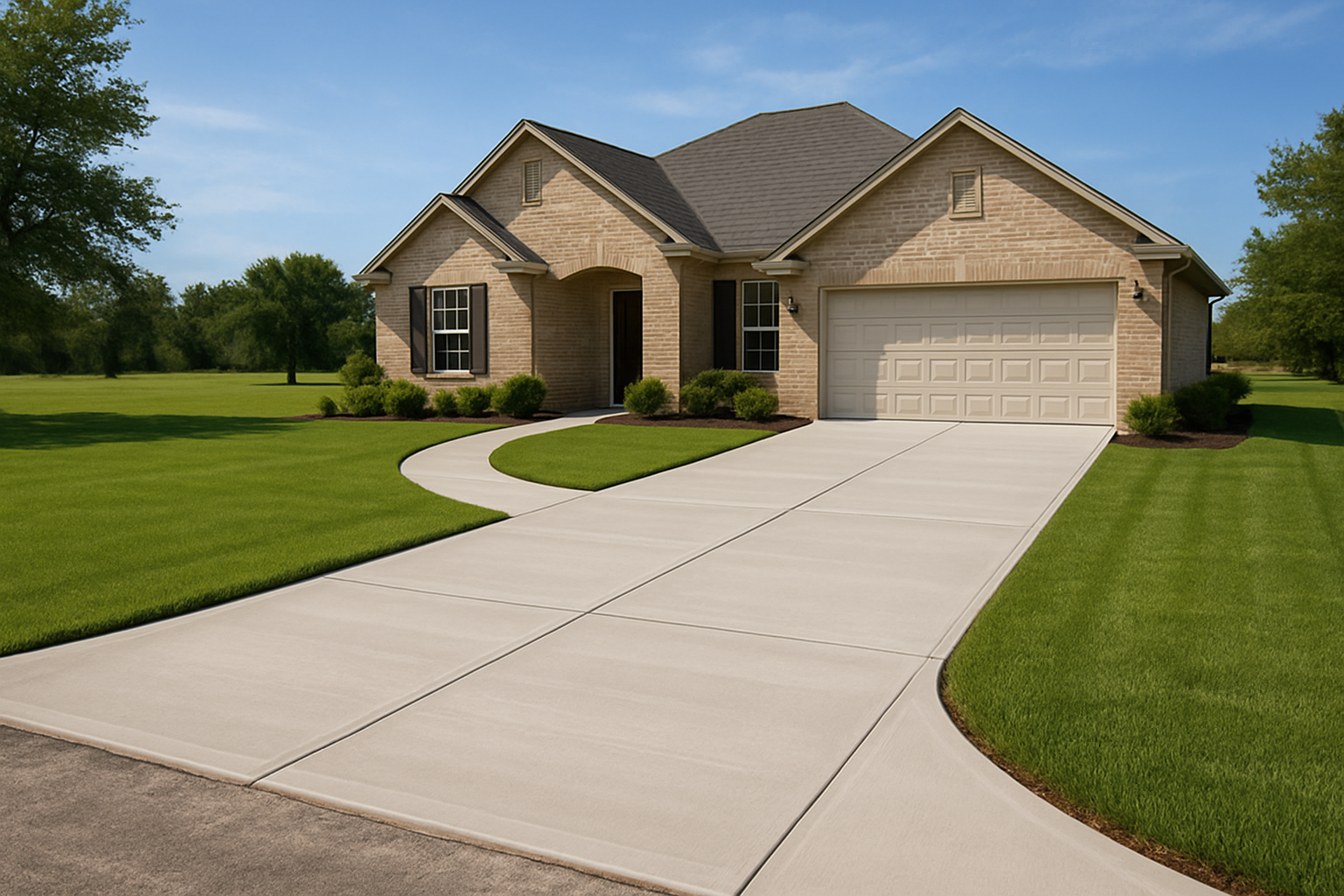
- Residential driveways and driveway extensions
- Concrete patios and outdoor seating areas
- Sidewalks and walkways
- Garage slabs and shop slabs
- Shed and barn pads
- Pool deck additions or repairs
- Concrete tear-out and replacement
If you are not sure whether August is the right time for your project, the best first step is to schedule an on-site look. A professional contractor can evaluate access, drainage, slope, existing concrete condition, soil concerns, and project goals.
Why Choose D and R Concrete Construction LLC?
When you hire a concrete contractor, you are not just paying for labor. You are trusting someone to build a surface that needs to hold up under Texas heat, rain, soil movement, daily use, vehicles, equipment, and time. That is why choosing the right team matters.
At D and R Concrete Construction LLC in Bells, TX, we bring local experience, practical knowledge, and a commitment to doing the job right. We understand the conditions homeowners face here in North Texas because we work in them every day. From hot August pours to soil preparation and drainage planning, we approach each project with care.
Homeowners choose D and R Concrete Construction LLC because we focus on:
- Local knowledge: We understand Bells, TX weather, soil, and residential property needs.
- Clear communication: We explain the process, schedule, and expectations before work begins.
- Proper preparation: We do not cut corners on grading, forming, or base work.
- Quality workmanship: We take pride in clean lines, solid finishes, and dependable concrete.
- Practical recommendations: We help customers make decisions that fit their property and budget.
Questions to Ask Before Starting Your Project
Before you move forward with a concrete project, it is helpful to ask the right questions. A reliable contractor should be willing to discuss the details and explain how they plan to handle your specific site.
Good questions include:
- What type of base preparation does my project need?
- How will drainage be handled?
- Do I need reinforcement such as rebar or wire mesh?
- Where will control joints be placed?
- How will the concrete be cured in hot weather?
- When can I walk, drive, or place weight on the concrete?
- What happens if the weather changes on pour day?
The answers to these questions can tell you a lot about the contractor’s experience and attention to detail.
Get Your Late-Summer Concrete Project Started the Right Way
Concrete is a long-term investment in your home. Whether you are adding usable outdoor space, improving curb appeal, replacing cracked concrete, or preparing for a new shop or structure, the success of the project depends on planning, preparation, timing, and workmanship.
In August, Bells, TX homeowners need to pay special attention to heat, curing, drainage, and weather timing. With the right contractor, late summer can still be an excellent time to complete a concrete project that looks good and performs well for years to come.
If you are ready to talk about a driveway, patio, sidewalk, slab, or other residential concrete project, contact D and R Concrete Construction LLC in Bells, TX. We would be glad to look at your property, discuss your goals, and help you plan a concrete project built for North Texas conditions.